Total Pageviews

Showing posts with label Ultimate. Show all posts

Thursday, February 20, 2014

The Ultimate Photography Cheat Sheet Every Photography Lover Needs

The almighty photo is quickly taking over the world. As our attention spans grow small, we really only want to see the photo and possibly a short sentence describing it. I mean look at social media avenues such as Instagram or Facebook, not to mention the newly coined term “selfie.” We just cannot get enough images in our lives. For this reason, quality photography is becoming increasingly important to captivate and lure in our audiences to our website, business, or blog.

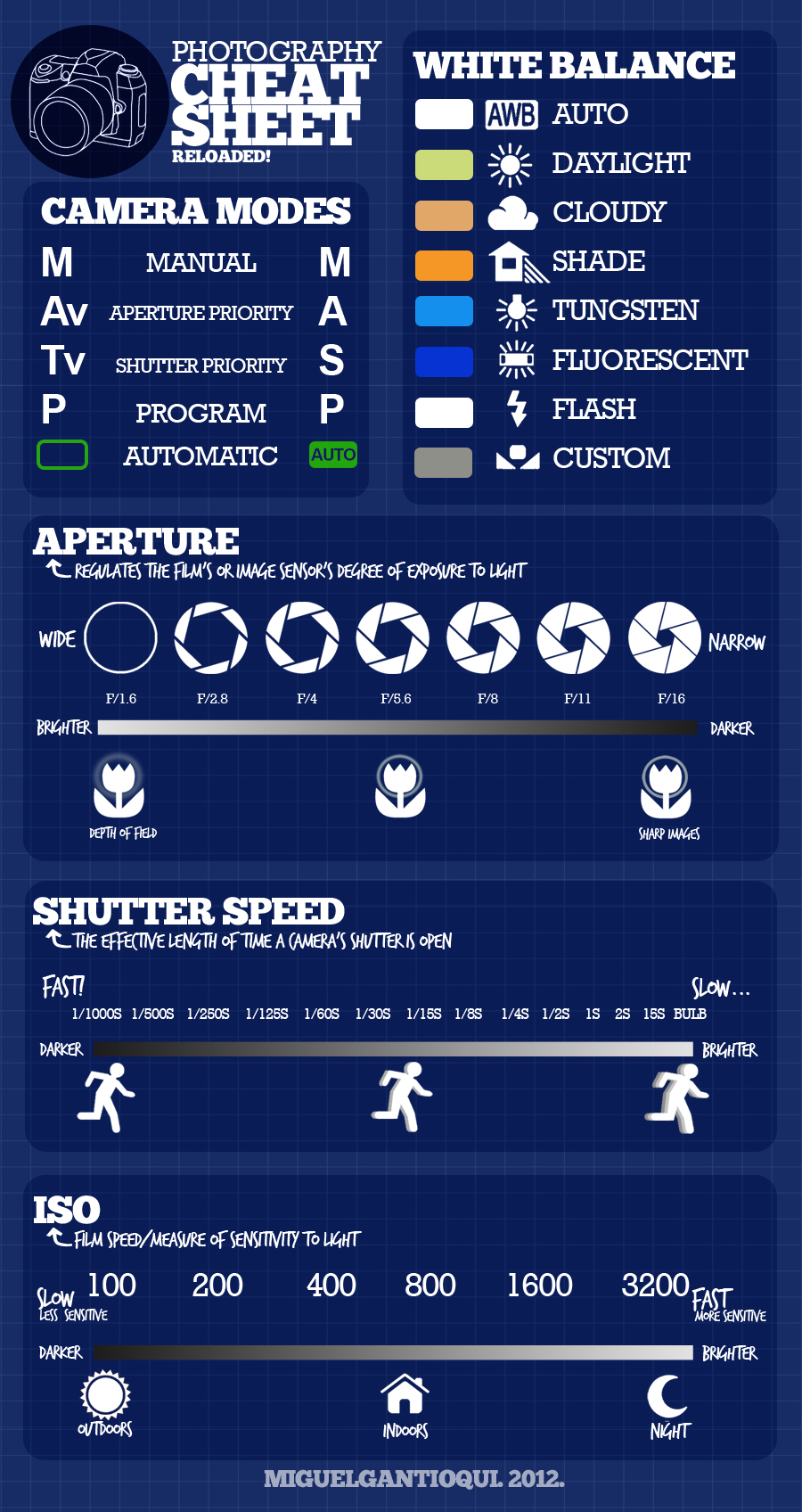
You can buy a fancy dSLR camera, sure, but do you know how to use it? I have this exact problem: a fancy camera that is not living up to its potential because I do not know how to properly operate it. Well, here is some good news for me and those of you in my situation: I have rounded up a whole list of photography cheat sheets to use! This is one you will want to bookmark and save for reference!

Once you have taken all of these lovely photographs, check out this post to see what your photographer rights are:

Now I don’t know about you, but this article makes me want to get out my dSLR camera and play! Which settings and/or cheat sheet intrigue you the most?

Also check out: The Most Useful Photography Tips and Tricks that Make You Look Like a Pro


View the original article here

Thursday, November 14, 2013

The Ultimate Lounging Solution for Back and Neck Pains

It’s as common as websites, this malady we refer to as back and neck pains. If you are a freelancer like me, you tap away on your laptop most of your working time making you susceptible to back aches and neck pains.

Here’s a solution that will alleviate your pain problems. Dr. Robert Swezey, M.D., wants to help people who suffer from these issues so he designed a lounging solution to provide optimum relief and comfort.

Whether you want to sit upright or laze on a couch, BedLounge will bear your spine, shoulders and head from your lower back to your upper back and finally your neck. You can adjust the armrests to go in or out. Headrest can extend to 12” and you have the option to rotate it 90-degrees to carry your head and neck. This allows your head freedom to move around. Made of aircraft foam, it’s sturdy and it comes with a lifetime warranty. Transport is not an issue either since it’s lightweight. Additional features are — armrests can be folded up, the headrest can be extracted so you can store the whole package in a closet after each use. I discovered this product at The Gadget Flow.

loungingbed

Anthony is a Lifehacker who lives and breathes giving tips to make your life easier. He is also a broadcaster/professional blogger who is fueled by cappuccino and Rock Music. If he's not busy writing for clients, and churning out e-books for greenhorn broadcasters and freelance writers, he gives tips to entry level broadcasters and freelance writers on his site The Write Freelance


View the original article here

Tuesday, September 17, 2013

Friday, September 13, 2013

The Ultimate Guide To Working From Home And Still GTD

You hate the commute, you get distracted by co-workers, and you think the solution is working from home.

After all, you’ll have more control over your space and you’ve heard people are more productive. This should make it pretty easy to get your boss’s okay to work from home, right?

Not necessarily. Some bosses aren’t comfortable with the idea because they know that remote work can be beneficial, but that it can also quickly go off the rails. They need to trust that you’re organized and driven enough to make it work.

Before you need to worry about getting stuff done while working remotely, you need to first get permission. There are four proven techniques you can use to get your boss’s approval on your remote work request:

First, not every job can be done remotely. Some places have high security demands that can’t be met remotely or require specialized equipment that’s just not economical to provide to remote employees.

If you don’t face these kinds of requirements one of the best ways to make sure you have a job that is remote-friendly is to find one that can be measured by results and not hours – results are easier for managers to track when they are dealing with remote workers.

Being a remote worker means you have to go to extra lengths to stay in touch with your teammates and managers. A lot of communication will happen and lines can get easily crossed. If you can prove you are an effective communicator, you’ll have an easier time getting the okay.

Not too many people will be willing to let you jump from spending 100 percent of your time in the office to spending it all remotely – there are going to be a few baby steps in between. The best way to prove you can handle remote work is to get permission to do it on special occasions – like sickness or bad weather – and really kick butt when you get the chance.

Don’t just wait for those special circumstances to prove that you can work from home, though. If you’re like most people, you probably already do work at home – maybe early in the morning when you’re answering some emails or in the evening when you’re finishing off that pitch. Take these opportunities to do great work and subtly let people know you did it at home.

When you ask your boss for permission to become a remote worker, it’s no different than any other pitch or presentation you’ve ever delivered. Know how it’s going to benefit your boss and the company and make those benefits stand out more than how much you’ll like it. You should also think about what reasons your boss could say no or what concerns they’ll likely raise – have answers ready for those, too.

If you nail your pitch, you’ll be working remotely.

So, you’re pitch went well and now it’s time to work from home. You wanted this and worked hard to get it because you thought you would be happier, more productive, and it would put you more in control.

That’s not always the case and working from home can be tough on your head for the following four reasons:

Working from home gets you away from your co-workers, but places you squarely around your family and in the middle of what can be a pretty chaotic environment; an environment with new people and new demands.

Remote workers often feel even greater pressure working from home than do their in-office peers. They feel more pressure because they are afraid their colleagues are judging them as “lazy” or “do nothing” because they work from home.

Playing hooky in the office is much harder than doing so as a remote worker. If you’re having a bad day it can be really easy to skip out on work, sit on your step, and have a beer. You need to know that hard days as a remote worker can be harder than those as an office worker because pushing forward at home is much harder.

When you work at an office, you have others buzzing around you and you might even have deadlines posted in public places. This doesn’t happen in a remote office. You need to have yourself together and organized because people don’t do it as much for you when you’re a remote worker.

Sometimes being a remote worker isn’t all it’s cracked up to be and you need to be ready for that. If you’re not, you can have your spirits crushed. If you’re having a bad day, reach out to your teammates and chat, but, most importantly, remember that it’s just one day and tomorrow will be better.

Working at home alone will only bum you out if you let it.

As a remote worker, being mentally prepared is only part of the battle.

A lot of people think that kitchen and coffee tables can double as workspaces, but they are way off the mark. In fact, they’re are almost guaranteed to fail. Instead of sitting in your kitchen or living room, here are some things you can do to set up a workspace and be physically prepared for remote work.

First, and I can’t stress how important this is, you need a dedicated workspace. It needs to be quiet and removed from the chaos of kids’ toys and meal-making. If there’s an extra bedroom, use that. If you don’t have an extra room, search around for a quiet corner of a room that isn’t used throughout the day and take it over.

Once you have your spot picked out, you need to start to fill it in and treat it like your office: get a dedicated chair and desk, and make sure you have the best internet connection you can get your hands on.

Though it can be tempting to lock yourself in your home office, that’s a bad idea. You’ve taken this step to have more control and see your loved ones a bit more. Don’t back away from that. Instead, learn to set boundaries with other people in your home, while still taking the opportunity to enjoy their company – it will refresh your mind and keep you more productive.

One of the most surprising things is that studies show remote workers are more productive than those in the office. Know why? It’s because those people in the office assume you’re working less than they are and they dial back their productivity.

Do the team a favor and make sure you’re keeping them up-to-date with your progress:

Don’t become invisible. Carry on small talk on chat apps and stay in regular contact.

Let people know when you’re stepping away. Blast out a “Taking lunch,” or “Taking a break,” message in your team’s chatroom.

Hold progress chats. These updates give you a chance to talk about what you’re working on today and what you worked on yesterday. They also help you share what goals you completed and it proves you’re getting stuff done.

Working from home is great if you’re prepared for it. If you’re not prepared, it can really be a blow and a setback for your career. These tips will help you work from home while still getting stuff done.

What tips do you have to help remote workers stay as productive as possible? Leave a comment and let us know.

We all want to get stuff done, whether it’s the work we have to do so we can get on with what we want to do, or indeed, the projects we feel are our purpose in life. 50 Tricks to Get Things Done Faster, Better, and More Easily

Featured photo credit: derschlosivia Flickr

Mark is the Marketing Director and Co-Founder of Contactzilla. In addition to his love for emerging technology, Mark is also a trustee of Deki, a very cool microfinance charity that helps entrepreneurs in developing countries generate sustainable incomes.


View the original article here

Monday, May 13, 2013

Friday, May 4, 2012

The Ultimate Rice Bowl

More than 5 years in the making… the long awaited sequel to How to Cook Brown Rice is finally here!

Ultimate Rice BowlThe Ultimate Rice Bowl is my own special recipe for a delicious vegan/vegetarian meal. It’s the perfect blend of warm, chewy, crunchy, and savory. It’s also very easy to make — no special cooking skill required.

This recipe is for a single serving of a very filling meal. If you want to make a smaller or bigger batch, feel free to adjust the ingredients proportionally.

Here’s how to make it…

Ingredients

1-2 cups cooked brown rice, depending on how hungry you are (make according to instructions in How to Cook Brown Rice)1/3 cup diced cucumber (I prefer English cucumbers)1 small tomato, diced (I normally use a roma tomato)4-5 sun dried tomatoes, each cut into 6-8 pieces (The best are Mediterranean Organic Sundried Tomatoes)1/4 – 1/2 avocado, diced2-4 tbsp minced green onion1-2 tsp toasted sesame oil (I use Spectrum Naturals Organic Sesame Oil)tamari to taste (a few splashes with a shaker bottle)1 tbsp sesame seeds (raw or toasted)

Instructions

Put the rice in a bowl.Add sesame oil, tamari, and sesame seeds. Use a fork to mix.Add cucumber, tomato, sun dried tomatoes, avocado, and green onion. Mix again.Enjoy!

Variations

Add 1 tsp mirin for a sweeter flavor (when you add the sesame oil, tamari, and sesame seeds)Add 1/3 cup bok choy, choppedSubstitute regular soy sauce or shoyu for tamariIf you like a strong onion flavor, try using minced white, brown, or red onion instead of green onion

You can certainly make this with leftover rice, but I suggest heating the rice first since this dish is best served warm.

I must caution you that this can be an addictive recipe. Once you try it, expect to make it often! :)


If you've found this website helpful, please donate to show your support. The average donation is about $21.

View the original article here

Tuesday, April 3, 2012

How to Do the Ultimate Brain Dump


When it comes to getting things done – whether we’re talking about David Allen’s wildly popular methodology or just the act of doing stuff – the first thing you have to do is get it all out of your head and capture it somewhere. Your brain is not meant to hold all of the stuff you have (or want) to do and keeping it all up in there will only serve to disappoint you in both the short and long term.

Knowing that you have to get it out of your head is one thing. Where you put it is an entirely different matter. Some people are great with tools of technology, such as apps on your mobile device or desktop software solutions. Others deal with this kind of stuff far better when it’s on paper. No matter which type of person you are, I’m going to unveil for you the ultimate way to get it all out – to do a “brain dump” if you will – so that you can keep moving forward instead of always looking back to see what might have slipped through the cracks.

That’s right. Even if you are someone who lives in the digital world, you need to write stuff down using simple analog tools. In fact, if you’re a technophile you’re in somewhat of a better position in that you don’t see the need to spend money on fancy pens and notebooks – you can save your money for the tech gear you want. There is something about writing something down that makes it stick; you connect better with the tasks, projects and goals you have on your plate when you write them down rather than enter them into a device.

You need to have the following headings for your list: Musts, Wants and Perhaps. Each of these heading represent the things you’ve committed to doing (Musts), the things you would like to do but haven’t committed to them yet (Wants), and the things you may want to do at some point but are far down on the priority list (Perhaps). You might need more than one sheet of paper for each list as you go, but start with the Musts, then move on to the Wants and finish up with the Perhaps. It is important that you go in that order, because that way your brain isn’t moving all over the place. It is focusing on one type of thing at a time and writing down the things that fall under that type until there are no more left to capture.

Now you need to honestly evaluate each list. Start with the Must list and move on until your have finished the Perhaps list. When you look at each list, use some of the principles of GTD to whittle the list down to a more manageable size. You can move stuff from one list to another during this exercise as well, but ultimately you want to wind up with the least amount of things on your Must list so that you can get to the Want list stuff that much faster.

Once you’ve criticized and crossed things off your lists that aren’t part of your “master plan” any longer, start to complete the things on the lists. Get the Must stuff out of the way first, then move on to the Want list – maybe even moving some of the Wants to the Must list as you go. Once Wants graduate to Musts, they become more crucial to you, and that means they have a greater chance of getting done. You’ll also be able to move some the Perhaps stuff into the Want list as you go, with the Perhaps list likely being the longest list you’ve got going.

Whenever you feel as if your life is getting out of balance or you are feeling overwhelmed by everything that is on your agenda, conduct this exercise and get yourself back to a more comfortable space. Not only is the stuff you’re trying to get done worth, but so is the person trying to get it done: you.

(Photo credit: X-ray of Male Skeleton via Shutterstock)

Mike Vardy is a writer, speaker, and "productivityist". You can read more of his writing and learn more about him at Vardy.me, and he can be found on Twitter as @mikevardy.


View the original article here

Thursday, January 26, 2012

Master Your New Year’s Resolutions: The Ultimate Infographic

We’re well into the new year, and chances are you’ve made resolutions. They’re the same ones as last year: lose weight, stop smoking, drink less, exercise more…

After all, the new year is a great opportunity to have a fresh start. You can evaluate what you’ve accomplished during the last year, and clarify what you want for the year ahead of you. So you make resolutions, hoping that you’ll stick to them this time. Being greatly motivated by your goals, you get started. For the first few days, everything goes well – you’re on your way to achieving what you want!

Then reality hits you.

It is not as easy as you thought. You get caught up by the day-to-day operations and routine. You try to keep up your new habits and focus. But two weeks in, you quit. You stop going to the gym, or you start smoking again.

What happened? And how can avoid this from occurring — again?

The following infographic answers these questions. Simply click on the image below to view the full-size PDF. The blue underlined words are hyperlinks. Click on them to get more information about that particular topic.

Keep this infographic handy whenever you feel yourself slipping — and you’ll have a much better chance of keeping those resolutions this year.

(Photo credit: Three Elements of True Motivation via Shutterstock)

Matt is Fluent Brain's CEO and Chief Visual Facilitator. Visual Facilitation supercharges your thinking, brainstorming, and problem-solving, bringing clarity and order to your thought processes. You can follow him on his blog (and via RSS), Twitter, Google+ and LinkedIn.


View the original article here

Wednesday, December 28, 2011

The Ultimate Holiday Gift (and How to Give and Receive It)

This gift is better to give AND receive.

We’re only a few days away from Christmas, and while not everyone celebrates that particular holiday, this time of year is a cause for celebration for many all over the world. It’s a time for reflection, a time for companionship and a time for giving.

The Western world tends to get really caught up in the giving part — or more accurately, the receiving part. That’s not something that can be deterred easily. Getting people to be more into the giving than receiving is a tough sell. It can be done, but it takes a lot on the part of many to break through.

But what if that sell could be much easier? What if I told you that the one giving the gift could also receive the same gift in kind — and yet it would be completely different than the one they gave? Better still, what if I told you that this gift is the ultimate holiday gift?

Now that I’ve got your attention, I’ll tell you.

The ultimate holiday gift is attention.

How is attention the ultimate holiday gift?

Attention is valuable, but only if it is paid.Attention is free, but also has a price.Attention is short-term, but can have long-term impact.

When you pay attention to someone or to something, you add value to it. Whether it is a family member or friend, a piece of software or a work project — when you give it your full attention it increases in value. And not just for the person or “thing” receiving it. You receive the value as well.

That value can be returned in knowledge, expertise, love, gratitude and — yes — even monetarily. The key to determining the value rests in how much of your attention you give. The more you give, the more you get.

How do you give more attention? By connecting and disconnecting. Connect as fully as possible with the person or thing you want to give attention to and disconnect from everything else. This doesn’t need to — and shouldn’t — be permanent. But it does need to happen in those moments.

The currency of attention is time. How much you want to spend is up to you, but remember that quality is always more valuable than quantity when you’re dealing with “time economics”.

Attention can be given and taken freely. It can also be applied when giving gifts other than attention.

For example, you can start planning now — or giving attention to — those who you want to give gifts to next holiday season. Rather than wait until it must have your attention (and likely less than full attention at that), you can take small moments to build up the list of people and corresponding gifts throughout the year. This means you’ll be better prepared going into next year and don’t need to focus on holiday shopping in the six weeks leading up to Christmas. It also means you won’t forget anyone that might not make the cut due to simple forgetfulness or a constrained budget.

The end result is a less stressful holiday season, which is better for everyone. And you’re able to do that by giving attention to a list like this over a longer timespan and taking your attention away from it whenever you want because you’re on top of it.

Even when you offer your attention for a short period of time, the effects of that full attentiveness can have a big impact over the long term.

You may work really hard on a small project and leave everything else in the dust over a 2 week period. Then when the project is finished you move your attention back to other things while that project begins to live a life of its own. A book that you might decide to write and self-publish or an app you’ve developed would be perfect examples. As these items sell, you’ll make money over the long-term because they have a longer shelf life than the time you spent giving them your utmost attention.

Relationships can benefit from both short and long term attention. Client relationships for small projects may only last a few weeks, but they’ll have a lasting impact on both them and your reputation. Longer term relationships with family and friends can be handled by giving attention to the little things (occasional phone calls/emails, connecting on social networks, etc.) and also the larger things. But the bottom line is that in order to have a give and take happening with attention, you need to be as fully engaged as possible.

Attention is the ultimate gift, but it is also the hardest one for many of us to offer. In a world where our attention can be easily taken away from us and to things and people that don’t warrant it, we must actually pay attention to, well…attention.

Which means that attention is the ultimate gift you can give not just to others, but to yourself as well.

I’m wondering how many of you were able to give this piece your full attention while reading it. Did you shift away from it? Was it because I couldn’t hold your attention or that you couldn’t (or wouldn’t) give it? I’d be interested to know in the comments.

(Photo credit: Christmas. Gift woman showing beautiful red gift box. via Shutterstock)

Mike Vardy is a writer, speaker, and "productivityist". You can follow him on Twitter, listen to him regularly on his podcast, ProductiVardy, and read more from him at MikeVardy.com and at Vardy.me.


View the original article here

Monday, August 8, 2011

From Nag To Shag – The Ultimate Marriage Hack For Men

Why are we so fascinated by all those worst-case scenario survival tips about situations that are as statistically unlikely to happen to us as winning the lottery? Some of those tips seem more useful than others, take Wikihow’s guide to surviving a shark attack.

Step 1) Remain Calm.” Hmm, calm during shark attack? Not so much.

Or this advice on what to do if attacked by a bear, courtesy of the Tongass National Forest: Forest Facts webpage,

“If a bear actually makes contact, surrender! Fall to the ground and play dead….” So far, so good, I think I could do that. Now what?
“… If the bear continues biting you long after you assume a defensive posture, it likely is a predatory attack.” Ya think?

In any case, I’m not sure that my playing dead performance could survive the distraction of being repeatedly bitten by a bear.

How about some more useful advice? Something that there is a good chance of you actually needing and employing? Like what to do when confronted by a nagging wife? Not unlike the famous Supreme Court Justice quote about pornography, nagging is hard to define, but you know it when you see it. It’s the bane of husbands everywhere. So what should you do in this commonplace worst-case marriage scenario?

Remain Calm
Imagine yourself as the pilot of a large plane or a secret forces special operative and try to remember that all emergencies are better handled without panic. Inhale slowly and deeply and as you exhale make a conscious attempt to relax your muscles.Remove head from sand (or elsewhere)
Much like throwing up, these marital skirmishes are always worse in the miserable anticipation. You may be thinking ‘I’d rather stick pins in my eyes than talk about our relationship’ and hoping that if you can just avoid the situation long enough, she’ll forget about it. Whilst that certainly is a popular strategy, its chances of success rank about the same of the plight of Mr. Ostrich, head hidden in the sand, hoping the lioness can’t see him.Stand your ground.
Gird your manly loins and resist the urge to run away. Either literally, by avoiding the situation or figuratively by allowing your brain to escape whilst your body remains in the firing line. Retreat is almost always a futile endeavor in these situations and can often make things worse as it provokes a more energetic pursuit. Whilst you may be able to outrun your pursuer initially, never under-estimate her persistence; you’re going to have to sleep eventually.Face your fear
It’s always a tactically sound move not to turn you back on the enemy. But this advice means more than that. It means figuring out for yourself what your resistance is about. Two of the most common are, fear of losing your freedom and/or fear of being shamed. Even when they are convinced their wives has the most unreasonable demands that will never be satisfied by anyone, men rarely like to feel they have failed to deliver. Once you’ve figured out what your real fear is, check out if it’s rational. If it seems likely that your fear could actually transpire, retreat immediately to safety. If not…Be assertive
If you really want to stop her hounding you, stop running. Women are much more satisfied with 100% of you 50% of the time than they will ever be with 50% of you 100%. Ducking and diving is a recipe for disaster. Rather than trying to evade the issue, stand in your power and say what you can and want to do and then do it. Keeping your word builds trust. Trust defuses nagging. As in business, always under-promise and over-deliver. The irony is that if you actually give her the attention and connection that she is craving, she’s almost certainly going to stop needing to talk about not getting it. Imagine that!Camouflage
See beyond the teeth and claws. Remember that it’s never about the X. It’s about her need to feel connected, respected, cared for, cherished and desired. You need to pay very close attention to what she is actually saying and yet, even more importantly what is she really wanting.Shock and awe
This is not for the faint of heart, but as they say, faint heart never won fair lady. Do the unexpected. Move towards the roar! Instead of getting defensive or giving the cold shoulder, try disarming her with charm. If your sense of humor is something she fell in love with, goof it up. If you can manage to get her to crack a smile, it’s all over. If fancy footwork is more your style, swoop in and spin or dip her. Scoop her into your arms and give her a gentle squeeze. If nothing else, reach out and touch her, gently. It’s hard to stay angry when you’re being held.

In conclusion, gentlemen, I give you the number one marriage hack of all time – Love the lioness and see how quickly she turns back into a happy kitty-cat.

The disclaimer. Men, there are no guarantees here, I offer you hope, rather than miracles with a reminder that these techniques are intended for use against common or garden nagging, they are not a get-out-of-jail card to deal with any serious offences you may have committed against the institution of marriage. Employ them at your own risk!

Mirabai Galashan MTh. helps people increase the amount of love in their lives. She is a healer and therapist who works with individuals, couples and groups, offering counseling, coaching and holistic healing. Mirabai has a masters in Spirituality and Health over 20 years' experience as a professional practitioner of complementary therapies. Learn more at www.lifehack.org//mirabaigalashan.com/.


View the original article here